How to register your address in the Netherlands and get a BSN
If you expect to spend at least 4 of the next 6 months in the Netherlands, you must register in person with your municipality within days of arriving. With no home address, you ask for a correspondence address instead. Registering is free and gives you your citizen service number (BSN).
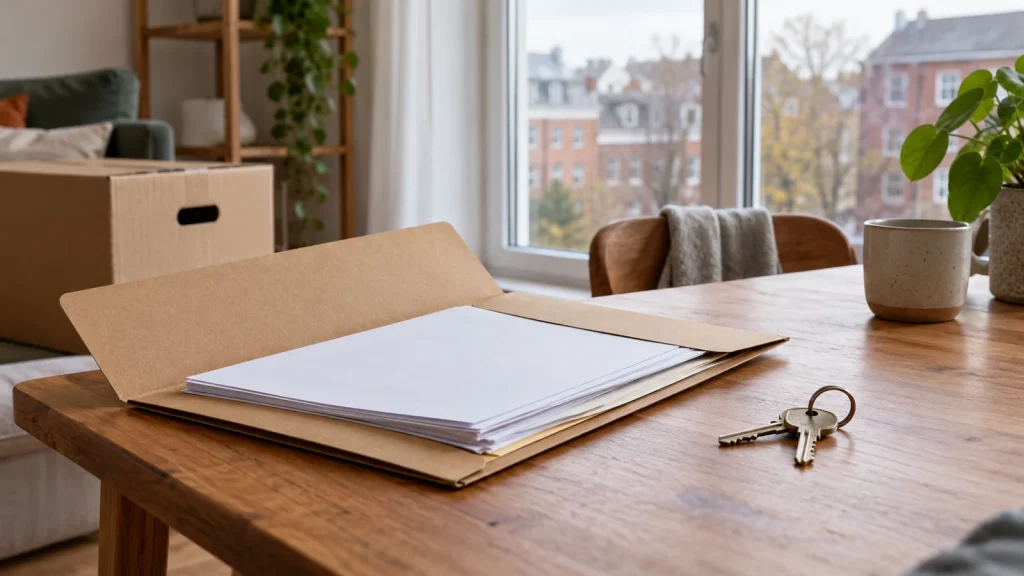
To register your address in the Netherlands, you go in person to the municipality (gemeente) where you will live. If you expect to be here for at least 4 of the next 6 months, do it straight away: the Personal Records Database Act says you must report no later than the fifth day after your stay begins. Registering at the municipality is free, puts you in the Personal Records Database (BRP) and gives you your citizen service number (BSN).
Counting the days. The Act sets the deadline as the fifth day after your stay begins, and Government.nl says within 5 days of arriving. The Rijksdienst voor Identiteitsgegevens (RvIG) says 5 days on its page for newcomers (in Dutch) but 5 working days on its BRP questions page. Count calendar days, weekends included, and you are on time under every reading.
Who has to register, and where
You must register as a resident if you expect to be here for at least 4 of the next 6 months, which is the two-thirds test in the Act; many official pages, such as Government.nl, simplify it to more than 4 months. You register at your home address or, if you have none, at a correspondence address (see below). If you are already in the BRP as a non-resident, your record is updated and your existing BSN stays valid.
If you cannot prove your identity and extra investigation is needed, you may wait for the outcome, but you must register afterwards.
Staying less than 4 months: the RNI
If you will be here for less than 4 months, or you live abroad, you can register in the Non-residents Records Database (RNI) instead, at one of the 19 municipalities with an RNI desk. Dutch, EU, EEA and Swiss nationals can pick any of them; for everyone else, RvIG and NetherlandsWorldwide name only Breda and Venlo, a limit RvIG dates to January 2026. Book an appointment first. Everyone being registered must come in person, children included. Bring a valid passport or identity card. For a child under 16, also bring the child’s valid passport or EU identity card and a birth certificate or declaration acknowledging parentage; foreign documents may need translation or legalisation. It is free, and at the desk you receive a letter with your BSN.
No home address yet?
Your home address (woonadres) is where you actually live. If you live at more than one place, the Act counts the one where you expect to sleep most nights over the next six months; without a settled home, it is where you expect to spend at least two thirds of your nights over the next three months. A rental contract is evidence, not the test: RvIG’s manual for municipalities (in Dutch) says what matters is whether you really live at the address.
With no home address at all, the Act says you choose a correspondence address (briefadres) and report to that address’s municipality within the same deadline. It is where official post reaches you, not where you live. The municipality decides whether you qualify and checks that you really have no home, and the address cannot be a PO box.
- At someone else’s home. Someone you know who is registered in the BRP at their home address, anywhere in the Netherlands, can let you use it if they agree in writing. At the population affairs desk (Burgerzaken) of their municipality, bring a written statement of why you need it, your valid ID, their signed consent and their ID or a copy; RvIG adds the start date and how long you expect to need it. Using their address does not make you an occupant, but they should check any effect on their own benefits first.
- Nobody to ask. If you genuinely have no home address and nobody can provide one, your municipality must register you at a correspondence address itself (article 2.23 of the Act), for example at the town hall or an organisation it works with. Ask the municipality where you are staying; it still decides whether you meet the legal conditions.
Whoever gives the address must pass your post on, and you must stay reachable. RvIG says no fixed term applies; Government.nl calls the arrangement temporary, and many municipalities agree a period with you. Once you have a home address, you register there. If your request is refused, you can object in writing; the decision usually explains how.
Do you need a residence permit first?
EU, EEA and Swiss citizens do not need one: your valid passport or ID card is your proof of lawful residence, and the deadline above applies to you too.
Other nationalities must be living here lawfully to register, which means you may need to apply for a residence permit first. Rijksoverheid adds an exception: if you have no valid residence status, you need a residence permit to be allowed to stay in the Netherlands and you are waiting for it, you do not have to register within 5 days.
Do not assume that covers you. Ede counts your stay as lawful while you may await the decision on your permit application here, and the law’s exemption here covers a foreign national who has no lawful residence. If your municipality sees your stay the way Ede does, the exception does not apply to you and the usual deadline does. Ask before you rely on it.
Step by step
- Before you move. Check whether your birth certificate and any marriage, divorce or adoption certificates need legalising or an apostille (NetherlandsWorldwide has a page for each country). This is usually done in the country that issued them, but public documents from one EU member state need no legalisation in another.
- Highly skilled migrant or researcher? Check for an international centre route. Some cities have one; elsewhere, ask your municipality.
- The Hague: its page for non-EU nationals says recognised scientific researchers, people under the IND’s highly skilled migrant scheme and people with privileged status need to book at The Hague International Centre.
- Rotterdam: the Rotterdam International Center can assist highly skilled migrants with the entire IND procedure and the registration process, on their behalf. Through its One-Stop-Shop you can book your municipal registration for a BSN and an IND appointment to collect your residence permit or give biometrics. The centre charges fees for appointments; registering directly with the municipality is free of charge.
- Southern Limburg: the IND offers a combined appointment at the Maastricht International Centre, including BRP registration and your BSN, if you live in southern Limburg, are not yet in the BRP and fall into one of its expat categories: highly skilled migrant, researcher under Directive (EU) 2016/801, orientation year for highly educated persons, start-up, foreign investor, or family member of any of these. Request it by email (address on the IND page).
- Book an appointment. In most cases you need one, and waiting times can be longer than usual, so contact your municipality well ahead of time. Amsterdam lets you walk into a City Office without one, except in Weesp. If you cannot get a slot in time, here is what three municipalities say:
- Utrecht asks you to make your appointment within 5 days of moving. It says it tries to add extra appointments every day, so keep checking its website.
- Ede advises booking before you move, and says you will not be fined if it cannot register you within 5 days.
- The Hague can backdate a non-EU national’s registration to the day you made the appointment, even if the appointment is later, as long as you made it after arriving and bring the confirmation.
- Go in person, with your family. A partner and children who moved with you must also register in person, each with valid ID.
- Get your BSN. You are given a BSN when you register, but how and when it reaches you differs, so ask at the desk. Rotterdam usually processes a registration within 4 weeks after you have handed in all your documents; for non-EU nationals, The Hague usually does so within 4 weeks and posts your BSN with the confirmation.
What to bring
Lists differ between municipalities, so ask yours which documents you need. Amsterdam’s is a useful example:
- Identity. EU, EEA and Swiss citizens: a valid passport or identity card, and all your passports if you have more than one nationality. Other nationalities: a valid passport and a valid residence permit for a longer stay. Not collected your residence card yet? Other municipalities accept other proof of lawful residence: The Hague, for example, accepts the IND residence endorsement sticker or the MVV sticker in your passport, or the IND’s invitation to pick up your permit. Ask yours.
- Proof of address. If you own the home, the original purchase contract. If you rent, a copy of the valid rental contract, or an original consent form signed by the longest-registered resident at the address with a copy of their ID.
- Original certificates. Your birth certificate and any other certificates you have, such as a marriage, divorce or adoption certificate or a family book. Amsterdam wants the originals, in Dutch, English, French or German; anything else needs a sworn translation.
Proof of address supports your registration but does not guarantee it: what counts is where you actually live, and some municipalities ask for more. Rotterdam says renters in some streets need a housing permit, with a declaration of intent from the landlord as part of the application; Utrecht does not register you before your rental or purchase contract starts.
For non-EU nationals, The Hague says certificates are not required for registration itself and can follow at a later appointment; the IND tells permit holders that a legalised and translated birth certificate is necessary. Bring them either way. By law, any municipality can ask for a Dutch translation by a sworn translator.
What your BSN is for
You use your BSN for health insurance, your tax return and your pension, and to apply for DigiD. It stays valid even if you later live abroad. You can look it up on MijnOverheid after logging in with DigiD, and it appears on your Dutch payslips and annual salary statements. Next, see our guides to applying for DigiD, Dutch health insurance and your first tax year.
Keeping your registration correct
Moving within the Netherlands
Report your new address to the municipality you are moving to, up to 4 weeks before the move and no later than 5 days after it, with valid ID and proof that you live there. If you hold a residence permit, the municipality passes the new address to the IND; if you report the move late, you must tell the IND yourself. Wrong details? Ask your municipality to correct them, with evidence; if that fails, contact the Meldpunt Fouten in Overheidsregistraties (MFO).
Leaving the Netherlands
If you will spend more than 8 months abroad within a 12-month period, you must deregister, even if the months are not consecutive or you keep your Dutch home. You do it from 5 days before departure up to the day you leave, and weekends and public holidays count towards those 5 days. How it works varies by municipality, but you always have to go in person if not all your family members at the address, such as your partner and children, are moving with you. Ask for an international proof of deregistration; you only get one if you deregister on the day you emigrate. Deregistering can affect your benefits, allowances and the accrual of your AOW state pension, so check with the organisations involved.
Leaving for good with a residence permit? Your residence card belongs to the Dutch government, and the IND says you must return it by post or at an IND desk by appointment; government.nl says to return it before you leave.
Costs and fines
Registering with your municipality is free, including at a correspondence address; appointments at the Rotterdam International Center are not. Registering late, not choosing a correspondence address when you have no home address, reporting a move late or failing to deregister can cost you: municipalities can impose a fine of up to €325, the maximum that article 4.17 of the Personal Records Database Act sets in 2026. Each municipality decides for itself whether to fine, and you can object to a fine.
Common mistakes
- Bringing a driving licence as ID. Amsterdam’s general lists ask for a passport or, for EU, EEA and Swiss citizens, an identity card, and its section for students says a driving licence is not accepted as proof of identity. The Hague’s page for non-EU nationals says the same.
- Bringing copies, or leaving out older certificates. RvIG’s BRP questions page asks for original documents and reminds you of birth certificates for you and your children, and marriage certificates from earlier marriages.
- Buying an address. RvIG warns that addresses sold by websites or companies can be misused, for example to register more people at one address, which can affect your benefits or allowances.
Official sources
- Wetten.overheid.nl: Personal Records Database Act, article 2.38 (in Dutch)
- Rijksoverheid: When to register in the BRP as a resident (in Dutch)
- Government.nl: When should I register with the Personal Records Database as a resident?
- RvIG: If you want to come and live in the Netherlands (in Dutch)
- RvIG: Frequently asked questions about the BRP (in Dutch)
- Rijksoverheid: Can I register at a correspondence address? (in Dutch)
- NetherlandsWorldwide: When do I have to register with a Dutch municipality?
- NetherlandsWorldwide: Contacting an RNI municipality
- RvIG: Addresses of the RNI desk municipalities (in Dutch)
- NetherlandsWorldwide: How can I register in the Non-residents Records Database (RNI)?
- Wetten.overheid.nl: Personal Records Database Act, article 1.1 on home and correspondence addresses (in Dutch)
- RvIG: Procedures manual for municipalities, place of residence (in Dutch)
- Government.nl: Can I get a correspondence address if I don’t have a fixed home address?
- RvIG: Frequently asked questions about correspondence addresses (in Dutch)
- Wetten.overheid.nl: Personal Records Database Act, article 2.23 on registering a correspondence address (in Dutch)
- IND: Staying in the Netherlands as an EU, EEA or Swiss citizen
- Municipality of Ede: Registering from abroad (in Dutch)
- NetherlandsWorldwide: Legalisation of foreign documents, by country
- NetherlandsWorldwide: What is document legalisation?
- Municipality of The Hague: First BRP registration when coming from abroad with a residence permit
- Municipality of Rotterdam: Rotterdam International Center
- Municipality of Rotterdam: First registration in the Netherlands
- IND: Expat Centre Maastricht Region and IND Service Point Maastricht
- City of Amsterdam: Moving from abroad (immigration)
- Municipality of Utrecht: Registering from abroad (in Dutch)
- IND: Living in the Netherlands
- NetherlandsWorldwide: What is a citizen service number?
- NetherlandsWorldwide: Where can I find my citizen service number?
- Rijksoverheid: How to report a move to the municipality (in Dutch)
- IND: Obligations of the foreign national and sponsor
- NetherlandsWorldwide: When do I have to deregister from a Dutch municipality?
- NetherlandsWorldwide: How do I deregister when I go abroad?
- IND: Leaving the Netherlands
- Government.nl: Reporting a change of address as a foreign citizen
- Wetten.overheid.nl: Personal Records Database Act, article 4.17 on fines (in Dutch)
Last checked against these sources on 28 October 2026. Rules and amounts change; the official pages above are the final word.