Amsterdam gives cooling supplies to low income residents
Amsterdam is giving cooling supplies to low income residents as hotter summers make poorly insulated homes harder to live in.

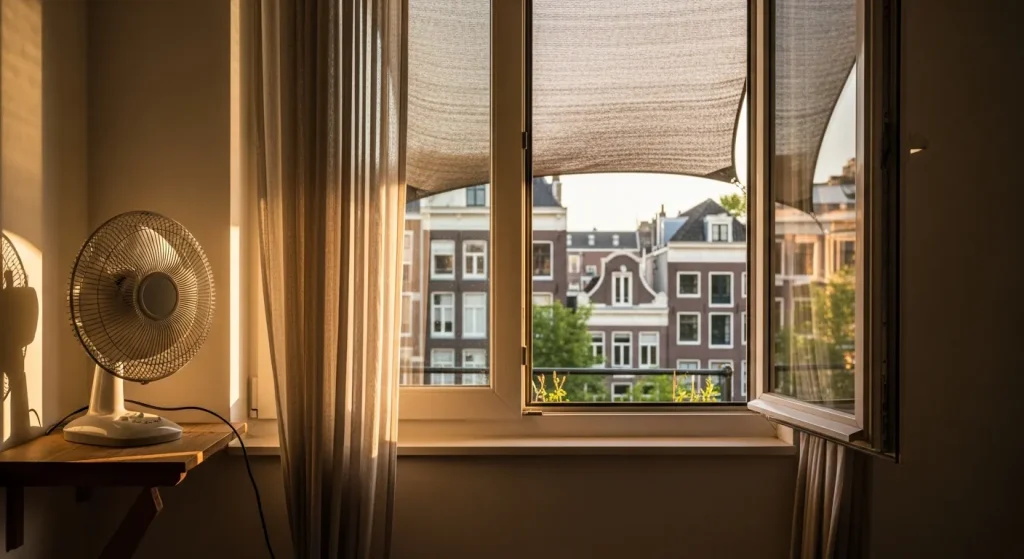
Amsterdam is giving cooling supplies to residents with low incomes as hotter summers make some homes harder to live in.
The city is offering items such as shade cloths, window screens and fans. These are meant to help people keep their homes cooler during warm periods.
The municipality has set aside 50,000 euros for the programme. Local organisations will help distribute the products. They will visit residents and offer practical help.
The measure is linked to a growing problem: summer energy poverty. In winter, energy poverty often means people cannot afford to heat their homes. In summer, the problem can be the opposite. Some people live in homes that become too hot, but they cannot afford cooling or improvements.
Amsterdam says low income residents are more likely to be affected. They often live in poorly insulated homes and have less money to make changes. They may also struggle with the electricity costs of cooling devices.
This matters because heat stress is not only uncomfortable. It can affect health. High indoor temperatures can be risky for elderly people, young children, pregnant people and people with heart or lung problems.
The city is also more vulnerable to heat because of the urban heat island effect. Buildings, roads and pavements hold heat. At night, the city can cool down more slowly than rural areas. In small apartments, top floor homes or poorly ventilated buildings, indoor temperatures can rise quickly.
Many homes in the Netherlands were built to keep cold out, not to handle hotter summers. Air conditioning is still less common than in many warmer countries. That means people often depend on shade, ventilation and timing.
Window screens can help because they allow people to open windows at night without insects coming in. Shade cloths can stop direct sun before it heats the glass. Fans can move air and make a room feel more bearable, though they do not actually lower the temperature.
The programme also fits into Amsterdam's wider climate adaptation work. The city is trying to prepare for more heat, heavier rain and other climate effects. But city wide changes take time. Small measures inside homes can help people now.
The next question is whether the budget will be enough. Amsterdam has many residents living in older or poorly insulated homes. If summers keep getting hotter, demand for cooling support may grow.
For now, the programme sends a clear signal. Energy poverty is no longer only a winter problem. In a warming city, staying cool can also become a basic living issue.