Hilversum blackout drill tests crisis response in 70 municipalities
The Hilversum blackout drill, a 36-hour simulated power outage, is part of a nationwide campaign now active in 70 Dutch municipalities, urging residents to prepare for emergencies.

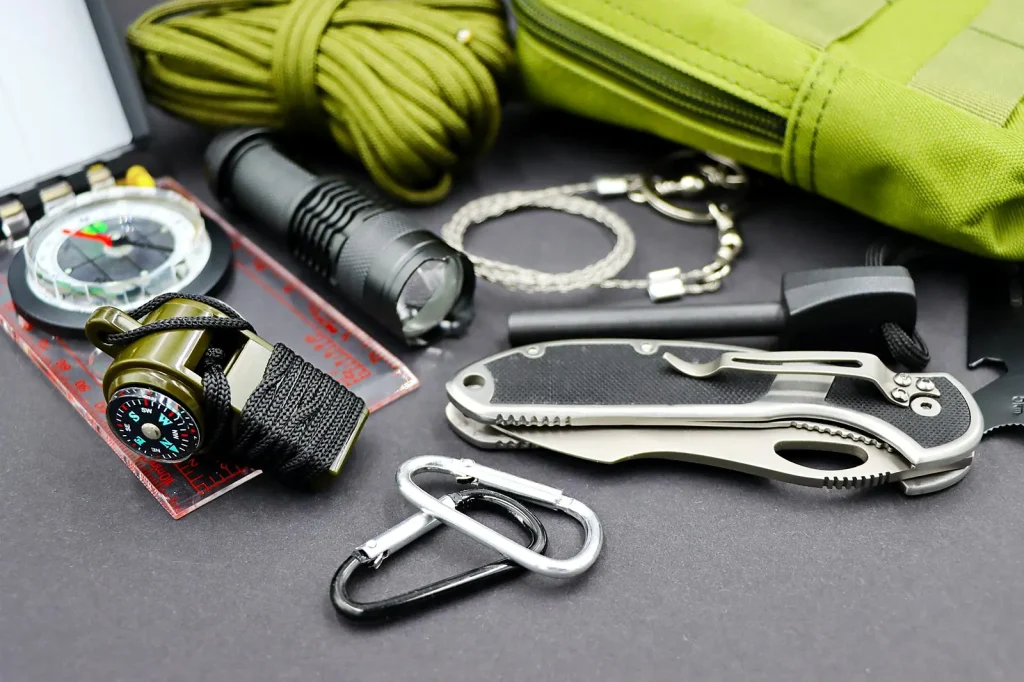
Residents across the Netherlands are being urged to prepare emergency kits as a nationwide ‘Denk Vooruit’ campaign gains momentum.
The Hilversum blackout drill has drawn renewed attention to how prepared Dutch households really are when the lights go out. As part of the nationwide Denk Vooruit (Think Ahead) campaign, the municipality of Hilversum recently staged a 36-hour simulated power outage, challenging residents to function as though electricity had simply ceased to exist.
Participants were asked to put away their usual conveniences, phone chargers, electric kettles, internet routers, and discover, in a controlled setting, just how dependent modern life has become on a stable power grid. The exercise was not a drill in the traditional emergency-services sense; it was a community-led experiment in self-reliance.
Organisers encouraged participants to assemble emergency kits containing essentials such as bottled water, non-perishable food, a battery-powered or hand-crank radio, torch lights, spare batteries, a basic first-aid kit, and enough cash for small purchases, since card payment terminals also fail when power goes down. For many residents, compiling that list was itself an eye-opener.
The Hilversum Blackout Drill in Detail
The Hilversum blackout drill unfolded over a full 36-hour window, giving residents enough time to move through an entire day-and-night cycle without electricity. This duration was deliberate. A few hours without power is manageable; a day and a half forces people to confront questions they had never previously considered: How do you keep warm? How do you cook? How do you stay informed without streaming services or social media?
Community coordinators held briefing sessions before and after the exercise, walking participants through practical strategies. These included using a gas camping stove safely indoors, keeping mobile devices charged with a portable power bank, and knowing which neighbours might need extra help, elderly residents, people with medical equipment that relies on electricity, or families with young children.
Local officials noted that the exercise revealed several blind spots. Many participants had never considered that their central heating boiler, even if gas-powered, requires electricity to operate its pump and thermostat. In winter conditions, that discovery could have serious consequences. The drill allowed residents to identify these vulnerabilities before a real emergency exposed them.
Feedback gathered after the 36-hour period showed that most participants felt more confident and less anxious about a potential real outage. The act of preparation, organisers argued, is itself a form of resilience-building, not because it guarantees safety, but because it replaces helpless uncertainty with structured, actionable knowledge.
A National Campaign Reaching 70 Municipalities
Hilversum is far from alone. The Denk Vooruit campaign, coordinated at a national level to strengthen civilian crisis preparedness, is now active in 70 municipalities across the Netherlands. The scale of the initiative reflects a broader policy shift in Dutch emergency management, one that emphasises individual and community responsibility alongside the work of professional services such as fire brigades, police, and the national crisis coordination centre.
Dutch authorities have long acknowledged that large-scale emergencies, whether caused by extreme weather, cyberattacks on infrastructure, or cascading technical failures, can overwhelm professional responders in the critical first hours. The Dutch central government’s national security framework explicitly identifies civilian preparedness as a key pillar of crisis resilience. The Denk Vooruit campaign is one of the most visible expressions of that policy in action.
Similar exercises have been held in cities and towns ranging from small rural communities to mid-sized urban centres. Each municipality adapts the format to its own demographic and geographic context, but the core message remains consistent: do not assume that help will arrive immediately, and do not assume that everyday infrastructure will hold.
The Netherlands is not uniquely vulnerable to power outages, but it is not immune either. The Royal Netherlands Meteorological Institute (KNMI) has documented a gradual increase in the frequency and intensity of extreme weather events in the country, including severe storms that have historically caused regional power disruptions. Ageing grid infrastructure in some areas, combined with rising electricity demand and the growing complexity of a partially decentralised energy system, adds further layers of risk.
Beyond weather, Dutch authorities have also raised awareness about the potential for infrastructure disruption linked to geopolitical instability and cybersecurity threats. While officials are careful not to amplify fear, the quiet expansion of preparedness campaigns like Denk Vooruit signals that contingency planning is being taken seriously at every level of government.
The recommended emergency kit, as promoted by the campaign, is designed to sustain a household for 72 hours, the standard international benchmark for self-sufficiency in a crisis. That figure is based on historical response times in major emergencies and represents the window within which professional support should, under most scenarios, become available.
Community resilience coordinators stress that preparedness is not about fear or pessimism. Rather, it is about recognising that infrastructure, however reliable, is never unconditional. A household that has thought through its response to a blackout is a household that is less likely to panic, less likely to make dangerous improvisational decisions, and less likely to place unnecessary demands on emergency services that may already be stretched.
As the Denk Vooruit campaign continues to expand, more municipalities are expected to schedule their own blackout simulation exercises throughout the year. For residents of Hilversum and the 69 other participating municipalities, the message is simple: the best time to prepare for a crisis is before it arrives.