New EU asylum rules start on 12 June
New EU asylum rules start on 12 June 2026, changing how asylum seekers are screened, registered and processed across Europe.


New asylum rules will start across the European Union on 12 June 2026. The changes come from the EU Asylum and Migration Pact, one of the largest reforms of European asylum policy in recent years.
The new system is meant to bring stricter checks at the EU’s external borders, faster procedures and clearer rules about which country is responsible for an asylum application.
For the Netherlands, this is now moving from policy debate to implementation. The Senate approved the Dutch implementation law on 26 May 2026, allowing the rules to take effect from 12 June.
One of the biggest changes is stronger screening at the EU’s external borders. People who do not meet normal entry conditions must be registered and checked. This can include identity checks, security checks and health checks.
EU countries must also screen people who are found on their territory after an irregular border crossing. The aim is to prevent people from entering the EU without being properly registered.
The European database Eurodac will also be expanded. More information about asylum seekers and people without the correct papers can be stored. This should make it easier to see where someone entered the EU and whether they already applied for asylum in another member state.
A major goal of the pact is to reduce what the EU calls secondary movements. This means people moving from one EU country to another to apply for asylum there. Under the new rules, the EU wants to make it clearer which member state is responsible for each application.
The pact also introduces mandatory border procedures for certain groups. This can include people from countries where few asylum applications are usually approved, people who are seen as a public order or national security risk, or people accused of misleading authorities.
In these cases, the asylum claim can be assessed at or near the EU border. If the person does not receive protection, the return process can start more quickly.
This part of the pact is one of the most debated. Supporters say it will make the system faster and more controlled. Critics worry that faster procedures may create risks if complex cases are not properly assessed.
The new rules also place clearer duties on asylum applicants. They must provide correct information about their identity and nationality, remain available during the procedure and stay in the country responsible for their application. If they do not cooperate, an application can be stopped or rejected in some situations.
The pact also includes protection for children and vulnerable people. Children who apply for asylum must be able to go to school within two months. Unaccompanied minors must receive a guardian quickly. People with disabilities, trauma, serious health problems or other vulnerabilities must receive support.
Another important part is solidarity between EU countries. Member states must together take over at least 30,000 asylum seekers each year from countries under pressure, or contribute financially. The standard financial contribution is 20,000 euros per person.
This is meant to support countries at the EU’s external borders, such as Italy, Greece and Spain. These countries often receive more arrivals because of geography.
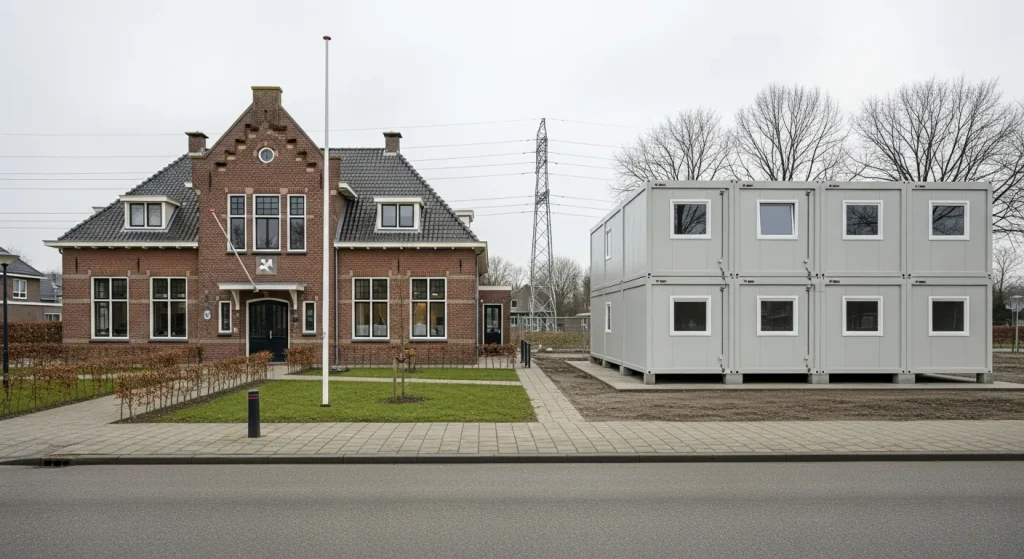
In the Netherlands, the asylum system is already under pressure. Ter Apel has often been overcrowded. Municipalities are regularly asked to provide reception places. The IND, COA, courts and local governments all face delays when the system slows down.
The new rules are meant to bring more control, faster decisions and clearer responsibility. But the result will depend on practical capacity. Staff, digital systems, legal support, reception places and cooperation between EU countries will all matter.
The promise is a stricter and more predictable European asylum system. The real test starts after 12 June.