ASML and Tata Electronics pact boosts India chip megafactory
The ASML Tata Electronics partnership signed in The Hague will see the Dutch chipmaker support Tata's Gujarat megafactory through expertise transfer and equipment supply.

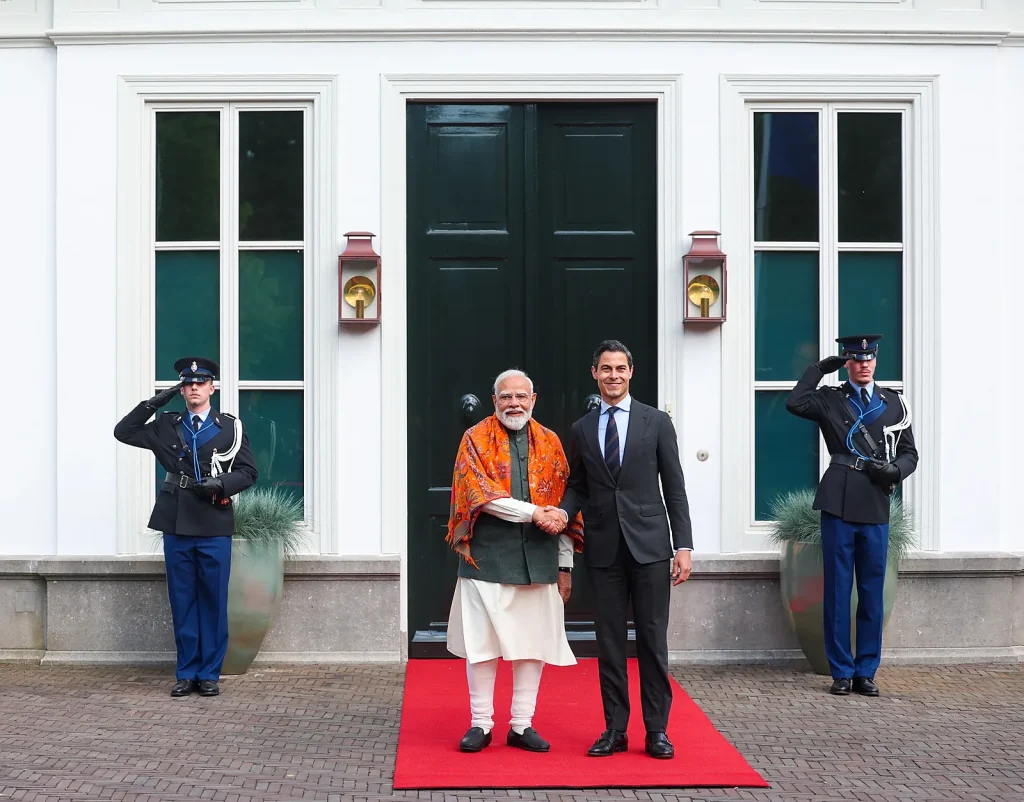
The ASML Tata Electronics partnership signed in The Hague this week marks a major milestone in the global semiconductor race, with the Dutch chip equipment maker pledging to support what is set to become India’s biggest planned chip production hub. The memorandum of understanding was inked during Indian Prime Minister Narendra Modi’s state visit to the Netherlands, in front of Dutch government officials including Prime Minister Rob Jetten.
For ASML, which is headquartered in the Brabant town of Veldhoven and is the global market leader in advanced lithography machines, the agreement signals a deepening strategic bet on emerging chip producers outside the traditional East Asian heartlands. For Tata Electronics, the semiconductor arm of India’s Tata Group conglomerate, it is a vote of confidence in its ambitions to become a serious player in advanced silicon. The Tata Group also owns the Tata Steel works at IJmuiden on the Dutch North Sea coast.
What the ASML Tata Electronics MoU covers
The terms of the ASML Tata Electronics arrangement, as outlined at the signing ceremony, focus on three pillars: the exchange of technical expertise, the supply of advanced manufacturing equipment, and the joint development of engineering talent. The Dutch group is expected to assist Tata as it builds out a megafactory in the western Indian state of Gujarat. The sprawling complex is designed to produce chips and finished chip products at industrial scale.
Tata Electronics director Randhir Thakur said the partnership would help create what he described as a “strong ecosystem” for chip production in India. ASML chief executive Christophe Fouquet, in turn, said he was “honoured to contribute through our technological expertise to talent development in India”. The agreement does not yet specify which models of ASML machines Tata will purchase, nor does it lock in shipment timelines, but it establishes the legal and technical framework for substantial future deliveries and joint engineering exchanges.
The ASML Tata Electronics relationship is also an unusual one in geographic terms. ASML’s most advanced systems, the extreme ultraviolet (EUV) lithography machines, are some of the largest, heaviest and most complex industrial products on the planet. Each unit is shipped in dozens of containers and installed over months by teams of specialised engineers. Establishing a steady flow of those machines to a brand new manufacturing cluster in India is a logistical undertaking on its own.
Why this matters for the Netherlands and global chipmaking
The ASML Tata Electronics deal arrives at a delicate moment for the Dutch semiconductor industry. ASML has spent the past two years navigating tightening export control rules on its most advanced lithography systems, particularly with respect to shipments to China. Diversifying its customer base toward partners in democratic, fast growing economies such as India is widely seen by industry analysts as a hedge against any further restrictions on the trade in advanced chip tooling. Dutch trade officials have repeatedly described the country’s chip equipment sector as a strategic national asset, on a par with the financial industry and the port of Rotterdam.
For The Hague, the announcement fits with a wider strategic push to deepen trade ties with New Delhi and reduce Dutch dependence on a small number of chip buying economies. The Indian market is enormous, both as a consumer of electronics and increasingly as a producer, and the country has poured billions of dollars into national incentives for new chip plants. A successful Gujarat megafactory would give India a domestic source for the silicon that powers its rapidly expanding consumer electronics, automotive, telecommunications and defence sectors. Industry reporting from Reuters has tracked Tata’s push into chips since the project was first announced.
From ASML’s perspective, the relationship brings a longer term advantage too: access to a fresh pool of trained engineers. Tata Electronics has signalled it intends to hire and train tens of thousands of workers for its new plant. Some of that talent could end up working alongside Dutch engineers on the installation, calibration and software customisation of ASML’s machinery in Gujarat, and may even rotate through ASML’s Veldhoven training facilities. The Dutch government has separately announced new bilateral programmes for science and engineering exchanges with Indian universities, which Tata is expected to feed into.
Still, the ASML Tata Electronics partnership is a beginning, not an endpoint. Building a working semiconductor cluster from scratch takes years, and India will have to navigate the same supply chain complexities that have shaped Taiwan, South Korea and, more recently, the United States. Power, ultrapure water, specialised gases, EUV grade clean rooms and the trained talent to run them all are scarce, and bottlenecks at any step can stall a fab for months. Whether the partnership will yield finished Indian made advanced chips before the end of the decade remains an open question. But Dutch policymakers and global chip buyers will be watching closely, with semiconductor strategy increasingly running through The Hague’s industrial diplomacy.