A tiny fossil from Maastricht turns out to be a new species, 66 million years old
It is just 1.6 millimetres long. A Belgian collector found it in the former ENCI quarry, and researchers now say it is a species new to science.

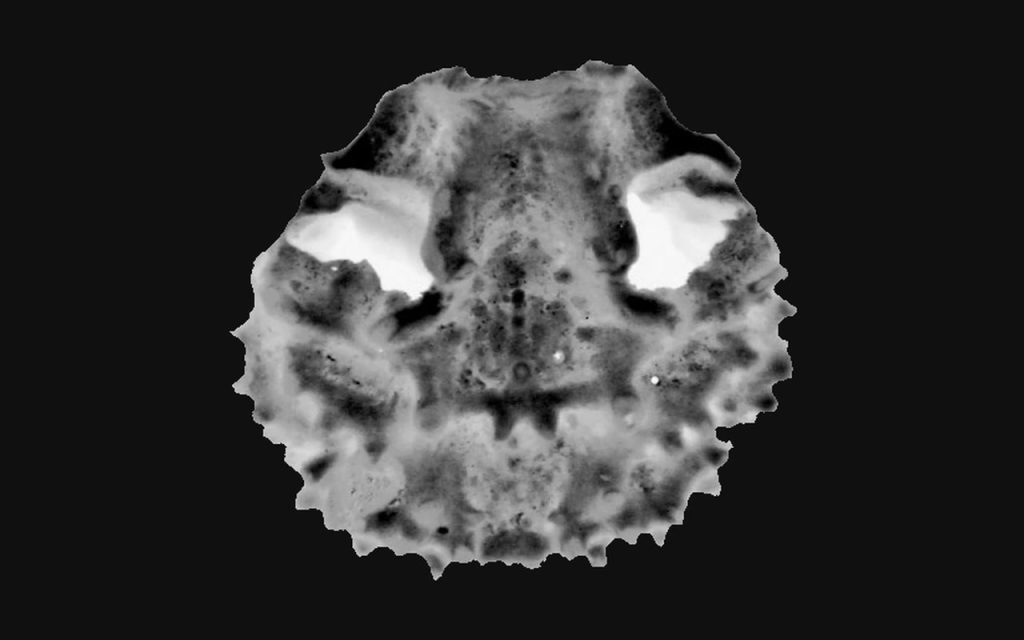
A fossil just 1.6 millimetres long, found in the former ENCI quarry in Maastricht, is a species new to science. Researchers described it on 5 November in the journal Geodiversitas and named it Alsasuacaris dirkeysermansi.
The name honours Belgian collector Diederik “Dirk” Eysermans. He picked the only known specimen out of sieved remains from the quarry and gave it to the Nationaal Oertijdmuseum in Boxtel. The museum studied it with the Natuurhistorisch Museum Maastricht, and it has been on show in Boxtel since 5 November.
What it is
The animal lived about 66 million years ago, just before the dinosaurs died out, in the warm sea that covered South Limburg. It belongs to the Cyclida, an extinct group of small crustaceans that looked like crabs.
It is only the third species known in its family, and the first preserved in 3 dimensions with its underside visible.
How it may have lived
How it lived is still unclear. The researchers suspect it was a parasite, perhaps on fish or other sea animals, but there is no direct evidence.
They also think more such species may turn up if fossils just millimetres long are checked closely.
The photo comes from the study by Fraaije and colleagues in Geodiversitas, published under a CC BY 4.0 licence. We cropped and enlarged it and replaced its white background with a dark one.