Tata Steel fires sustainability director after one day
Tata Steel has ended the contract of Donald Pols one day after he started as sustainability and communications director.

Tata Steel has ended the contract of Donald Pols one day after he started as sustainability and communications director.
Pols is the former director of Milieudefensie, one of the Netherlands' best known environmental organisations. His move to Tata Steel had already caused strong reactions when it was announced in May.
Tata Steel said additional information about his background had become clear in recent days and had not been shared with the company. The steelmaker then decided to end the contract immediately.
The new information concerns Pols' student years in South Africa. Dutch media reported that he was involved with the Afrikaner Studente Front, a far-right student movement that opposed the end of apartheid and stood against the ANC of Nelson Mandela.
Pols has acknowledged that he was part of the movement at the time. He has described those earlier views as wrong and said he is not the person he was then.
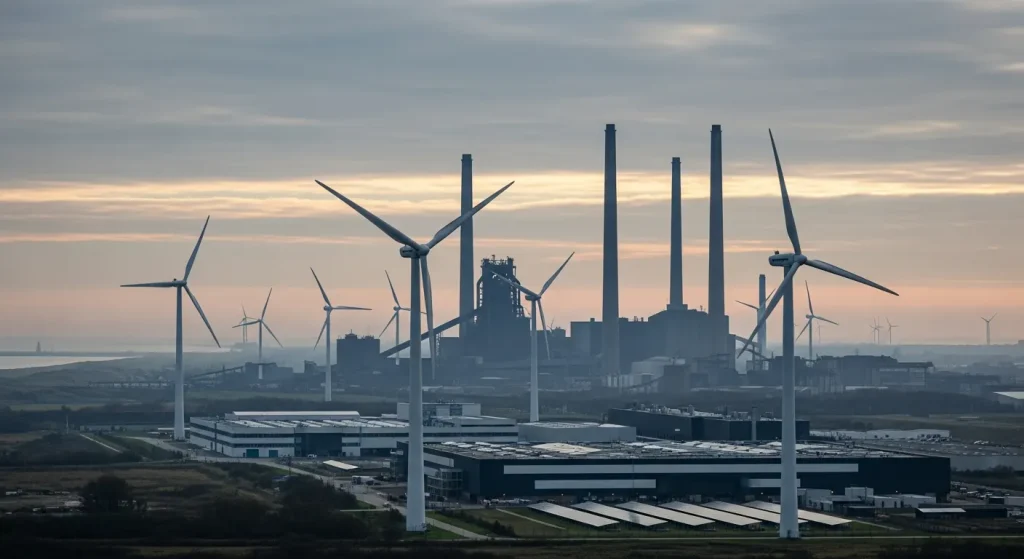
The case is sensitive for several reasons. First, Tata Steel is one of the most controversial industrial companies in the Netherlands. The site in IJmuiden is central to debates about pollution, public health, jobs and the future of heavy industry.
Second, Pols was not a normal appointment. As head of Milieudefensie, he had spent years pushing major companies to take stronger climate action. His move to Tata Steel was seen by some as a chance to change the company from inside. Others saw it as a betrayal of environmental activism.
Milieudefensie reacted with disappointment when his move was first announced. The organisation said it had no understanding for the choice to join one of the Netherlands' largest polluters.
For Tata Steel, the appointment was meant to send a different message. The company wanted to show that it was serious about sustainability and willing to bring in a strong critic.
Instead, the appointment has now become a reputational problem. A sustainability director needs public trust. That is especially true at a company facing pressure from residents, courts, regulators and climate groups.
The story shows how environmental politics works in the Netherlands. Climate policy is not only about government targets. It also involves court cases, activist groups, company strategy and public pressure.
Tata Steel remains a major employer and a major source of industrial emissions. The company wants to make steel production cleaner, but the process is expensive, complex and politically sensitive.
The next question is who will lead Tata Steel's sustainability and communications strategy now. The company still needs to show how it plans to reduce pollution and rebuild trust.
The Pols case will likely remain part of the wider debate over whether large polluting companies can change from within, and what kind of leadership is needed to make that credible.