Northern provinces weigh €14.5bn Lelylijn rail investment
The Lelylijn rail project gains momentum as four northern Dutch provinces consider annual contributions of up to €40 million to fund a €14.5 billion rail link to the Randstad.

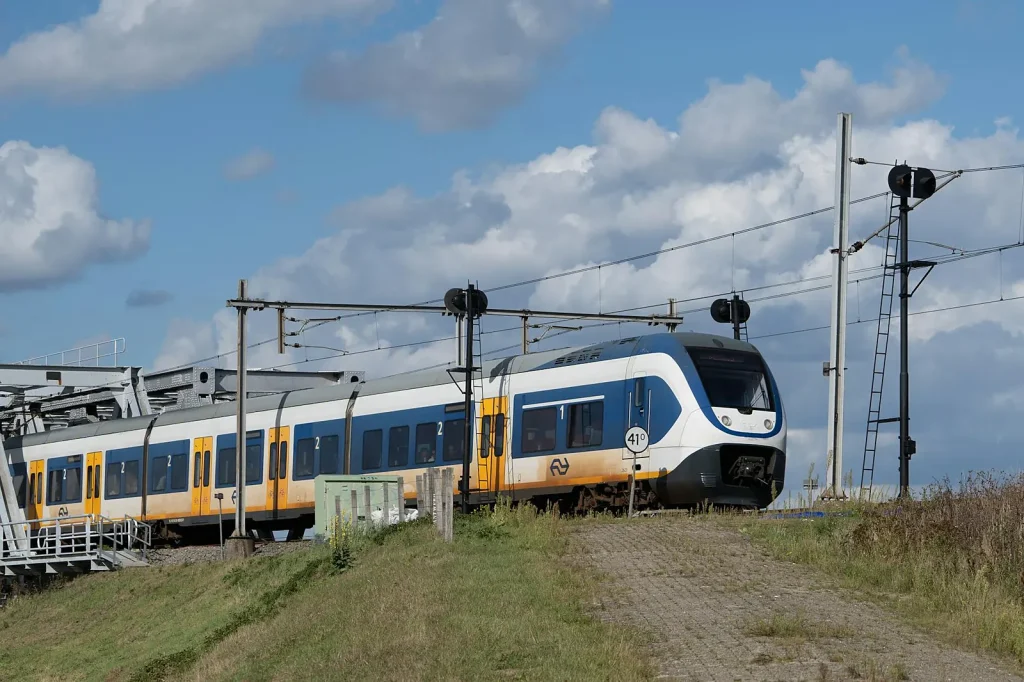
Four northern provinces pledge up to €40 million a year as the long-debated rail link to the Randstad moves closer to reality.
The Lelylijn rail project is entering a decisive new phase, with the provinces of Groningen, Friesland, Drenthe, and Flevoland collectively exploring whether they can each set aside up to €40 million per year to help finance the construction of a new high-speed rail connection between Northern Netherlands and the economically dominant Randstad region. The move signals a significant shift in momentum for an initiative that has spent years mired in political debate and feasibility studies.
The combined provincial contribution would amount to roughly €40 million annually from the northern regions as a whole, forming part of a broader funding architecture. The proposal builds on advice from a prominent former Dutch central bank official, who recommended that the national government commit €400 million per year over 25 years, covering approximately three-quarters of the project’s estimated total cost of €14.5 billion.
Why the Lelylijn Rail Project Matters for the North
For decades, Northern Netherlands has struggled with what many residents and regional politicians describe as a structural connectivity deficit. Travel times between cities like Groningen and Amsterdam remain long by European standards, and the absence of a fast rail link is widely seen as a barrier to economic investment and population growth in the region.
The Lelylijn is designed to change that. Once completed, the rail line would dramatically cut journey times between Groningen and the Randstad, the densely populated western conurbation that includes Amsterdam, Rotterdam, The Hague, and Utrecht, making the north a far more attractive destination for businesses, workers, and students alike.
Regional authorities argue that improved connectivity would help address the long-standing economic imbalance between the prosperous west and the comparatively underserved north. Studies have suggested that faster rail links can catalyse job creation, attract inward investment, and support house-building in areas where land is available but access is limited. According to the Dutch national statistics office CBS, Northern Netherlands provinces consistently record lower average incomes and slower GDP growth than their western counterparts.
Beyond economics, proponents point to environmental benefits. A modern electrified rail line would offer a low-carbon alternative to car travel on one of the busiest long-distance corridors in the country, supporting Dutch climate commitments under the Paris Agreement.
Funding Structure and the Road Ahead for the Lelylijn Rail Project
The financial model taking shape is a layered one. The national government would bear the lion’s share of costs, around 75 percent, if it adopts the recommended annual €400 million allocation over a 25-year construction and delivery period. The four northern provinces would collectively contribute the remaining regional share, with the exact per-province breakdown still subject to negotiation.
Regional officials are also actively pursuing European Union co-financing. The EU’s Connecting Europe Facility and cohesion funds have previously supported large-scale transport infrastructure in member states, and Dutch authorities believe the Lelylijn’s cross-regional economic development rationale aligns well with European funding criteria. Securing EU subsidies could meaningfully reduce the burden on both national and provincial budgets.
However, nothing is guaranteed. The national government has not yet formally committed to the €400 million annual figure, and any major infrastructure pledge of this scale requires parliamentary approval and coalition agreement. With Dutch politics currently navigating a complex set of budgetary pressures, including defence spending commitments and the ongoing costs of the nitrogen crisis, finding durable political consensus for a 25-year infrastructure commitment will not be straightforward.
Infrastructure projects of comparable ambition in the Netherlands have a mixed track record. The construction of the HSL-Zuid high-speed line to Belgium ran significantly over budget and over schedule, a cautionary example that critics of large rail projects frequently cite. Supporters of the Lelylijn argue that lessons have been learned and that modern project governance frameworks can avoid those pitfalls.
The provinces are expected to formally present their funding proposals to the national government in the coming months, after completing internal assessments of their fiscal capacity. Provincial councils in Groningen, Friesland, Drenthe, and Flevoland will each need to sign off on the financial commitment before any binding agreement can be reached.
For communities across Northern Netherlands, the stakes are high. The Lelylijn has become something of a symbol, of whether the Dutch state is genuinely committed to reducing regional inequality, or whether ambitious plans for the north will once again be deferred in favour of projects closer to the political and economic centre of gravity. The next 12 to 18 months are likely to determine whether the project finally transitions from aspiration to construction.
What is clear is that the provinces are no longer content to wait for a top-down solution. By putting their own financial commitments on the table, they are applying direct pressure on The Hague to match their ambition, and making it politically harder to walk away from one of the most consequential infrastructure decisions facing the Netherlands in a generation.